“When Should I Mail Wedding Invitations?” Thoughts on a practical timeline.
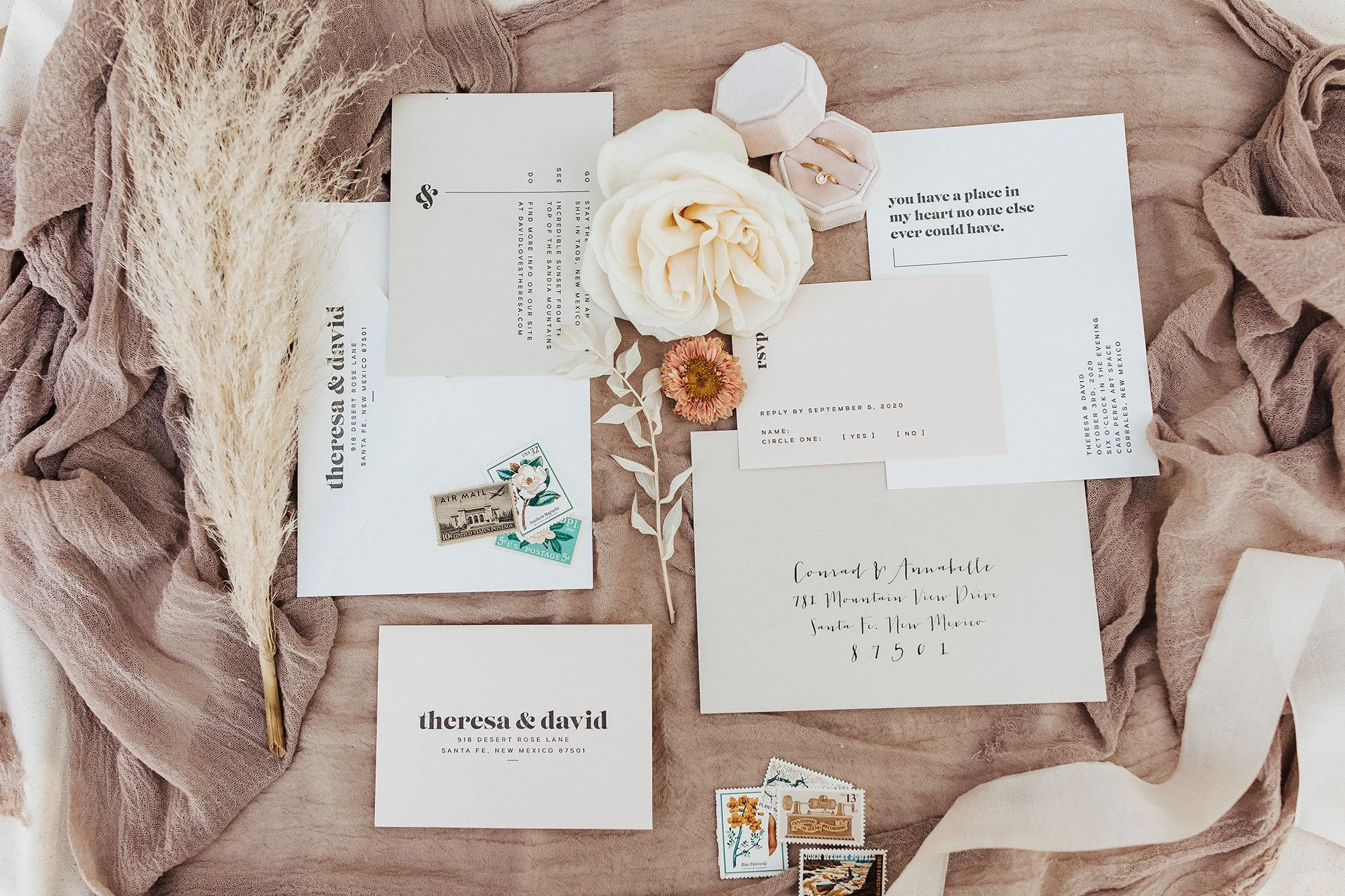
There’s a special kind of hush that falls when you slide your finished wedding invitations out of their box for the first time. The weight of the paper, the way your names look side by side—it’s the moment your wedding day starts to feel real. But once the happy tears dry and the envelopes are addressed, a very practical question comes rushing in: when should you actually mail wedding invitations?
Wedding invitation etiquette isn’t meant to be stressful or stuffy; it’s really about caring for your guests, honoring your celebration, and giving your stationery the spotlight it deserves. Let’s walk through the timing, the why behind it, and how to make mailing invitations a lovely part of your engagement story.
Why Timing Matters More Than You Think
It may feel like just another planning box to check, but the timing of mailing stationery has a ripple effect across your entire wedding. The date you send your invitations impacts how many guests can attend, how smoothly your seating chart comes together, and even how relaxed you feel in the final weeks before your celebration.
When wedding invitation etiquette is followed thoughtfully, you give your guests the time they need to say yes with ease. They can request time off work, book flights and hotels, arrange childcare, adjust budgets, and start getting excited right along with you. That extra cushion of time is a quiet kindness—and your future self will be deeply grateful when you’re not chasing late RSVPs days before your caterer’s headcount deadline.
Invitation etiquette also matters for your stationery itself. Luxurious, handcrafted letterpress wedding invitations are meant to be seen and savored, not rushed. By planning a realistic mailing window, you honor the care that went into each piece of paper and give your designs the space to do what they do best: tell your story beautifully.
The Classic Timeline as a starting point
Most traditional advice for mailing invitations centers around one key number: six to eight weeks before the wedding day. This is the classic window recommended by long-standing wedding invitation etiquette, and for many weddings it still works perfectly.
Sending invitations six to eight weeks prior gives guests time to respond and prepare, while keeping the event close enough on the calendar that it feels exciting and immediate. If your wedding is local for most guests, this range is usually ideal.
But like most etiquette, this guideline works best when you use it as a framework, not a rule carved in stone. Your perfect timing depends on a few personal details: how many guests are traveling, whether it’s a busy holiday season, and how complex your plans are.
Think of the traditional six-to-eight-week standard as your starting point. From there, you can adjust your stationery mailing timeline up or down based on your specific celebration. A small brunch wedding in your hometown might lean closer to six weeks. A mountaintop celebration in Utah with guests flying in from both coasts? You may want to give them a little more runway.
Save the Dates vs. Invitations: Who Needs What, and When?
A thoughtful timeline actually begins long before your formal wedding invitations are ready. If you’re hosting more than a handful of guests, especially if many will be traveling, save the dates are a gift.
Most couples send save the dates about six to eight months before the wedding. For destination weddings or holiday weekends, it’s perfectly acceptable—and often wise—to send them even earlier, sometimes up to nine or ten months out. This early touchpoint helps guests block their calendars and start watching flights and accommodations, long before the formal invitation arrives.
Then, when it’s time for mailing invitations, your guests already know the basics: the date, the general location, and that they’re truly wanted there. The formal invitation can then shine as it’s meant to: as a beautiful keepsake that shares all the details.
Wedding invitation etiquette is simple here: save the dates are optional, but consistency is not. Whoever receives a save the date should also receive a wedding invitation. Think of the save the date as the first chapter, and the invitation as the full, beautifully bound book.
Special Timing Considerations: Destination, Seasons, and Travel
Not all weddings are created equal when it comes to timing. Some celebrations ask your guests for more than an afternoon; they may be flying across the country, driving into the mountains, or celebrating over a long weekend. In these cases, invitation etiquette bends a little to serve practicality.
For destination weddings—whether you’re saying “I do” by the ocean, in a charming European village, or at a mountainside ski lodge—mailing invitations earlier is considerate and often necessary. Three months before the wedding is a lovely target for most destination events, especially when paired with timely save the dates. This extended window allows guests to secure passports if needed, plan vacation days, and budget for travel costs.
Seasonal timing matters too. If your wedding falls during a busy travel period, such as summer vacation months or around major holidays, consider adding a couple of weeks to the usual timeline. Guests’ schedules fill quickly during these times, and flights and hotels can book up fast. Mailing stationery earlier cuts through the chaos and ensures your celebration has its rightful place on their calendars.
And then there’s Utah’s own charm: if you’re getting married in the mountains of Park City during ski season, or hosting guests during a popular event in Salt Lake City, it’s wise to give everyone a generous notice. The more guests have to coordinate, the earlier you want your invitations in their hands.
RSVP Dates, Headcounts, and the Art of the Gentle Nudge
Wedding invitation etiquette isn’t only about when the invitations go out; it’s also about when those treasured responses come back. Your RSVP date should align with the needs of your venue, caterer, and any other vendors who require a final headcount.
Most couples set their RSVP deadline about three to four weeks before the wedding. This gives you time to follow up with anyone who hasn’t responded, finalize seating charts, and pass confirmations along to your vendor team without panic.
When mailing invitations six to eight weeks before the big day, this RSVP date falls nicely at the halfway point. Guests have a couple of weeks to check schedules and respond, and you still have a comfortable buffer to handle the inevitable stragglers.
If you’re worried about late responses, you can build in a quiet cushion. For example, if your caterer needs numbers two weeks before the wedding, set your RSVP date three or even four weeks ahead. That way, any polite reminder emails or texts you send won’t feel rushed—and you won’t be juggling “Will they or won’t they?” as you’re packing your wedding day emergency kit.
When you zoom out, wedding invitation etiquette is really just a love language of time and thoughtfulness. By understanding when to mail wedding invitations—and how that timing weaves through save the dates, RSVPs, travel plans, and production schedules—you create a smoother, kinder experience for both you and your guests.
At Letterpress Made, we want mailing invitations to be a quiet celebration all its own—a pause in the bustle where you send a stack of beautiful paper into the world, trusting it will carry your joy straight to the people you love most.